|
|
|
|
|
|
|
|
|
The Yellowstone National Park section is a detailed portfolio containing several
multi-page sections with hundreds of images on Wildlife and Scenery of Yellowstone.
It compiles sections from the Animals Wildlife Studies on Bears, Elk, Pronghorn and Bison,
a section with 4 pages on Bighorn Sheep, Coyote, Moose, Deer and River Otter, and the
Wyoming Scenic section detailing scenic areas of Yellowstone and the Grand Tetons.
Also included is a new six page section on the Birds of Yellowstone National Park.
The first National Park, the Yellowstone region was set aside in 1872 by Ulysses S. Grant,
but poaching and destruction of natural resources continued unabated until the Army set up
a camp in Mammoth Hot Springs in 1886, some of which can still be seen. Procedures
developed by the Army to protect the wildlife and land were adopted by the National
Park Service when they were created in 1916. Many park areas carry the names
of early superintendents (e.g. Norris Geyser Basin), and Harry Yount, the first man
assigned by Norris in 1877 to guard the wildlife, is considered the first Park Ranger.
Yellowstone National Park contains within its 3500 sq. mi. the largest supervolcano caldera
in North America. The magma lake (centered below Yellowstone Lake in the southern part of
the park) provides the energy to power half of the world’s geothermal features, most of which are
in the southern part of the park (including geysers, mud volcanoes, hot springs, and other features).
Click a display composite below to select a section or page.
|
Images in this section are in several different Galleries on the Photoshelter website.
The Banner below leads to the Gallery Collections page where a Gallery can be selected.
Images from Yellowstone are in numerous galleries in the Wildlife and Scenic sections.
|
|
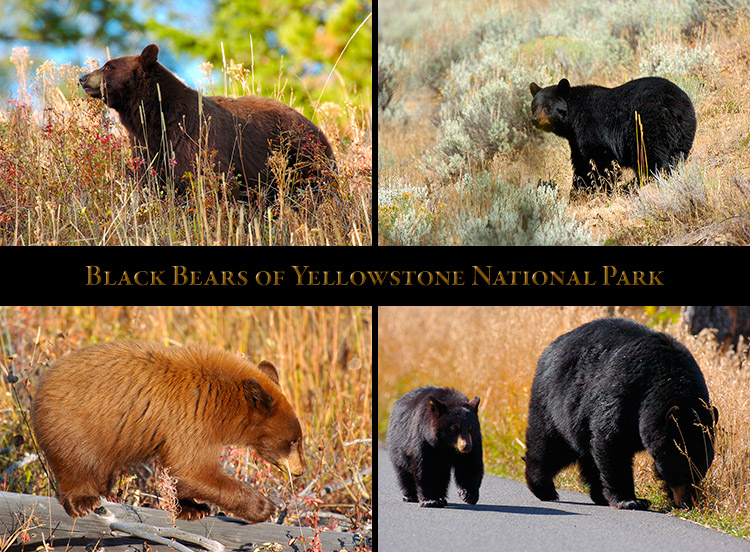
The Yellowstone Bears section houses half of the available Black Bear images.
More than 100 images of Black and Cinnamon Black Bear adults and cubs from
several locations in Yellowstone National Park are displayed in this subsection.
The Overview index page has sample images from each of the section pages.
|
|
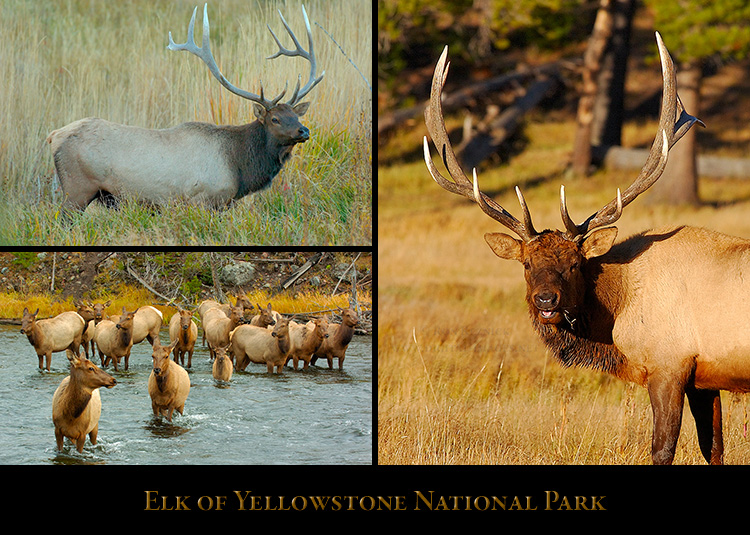
The Elk section contains 200 images of Elk from Yellowstone National Park. It is
separated into three pages: Charger, a Bull Elk; Elk of Mammoth Hot Springs; and
Miscellaneous Elk. This Overview index contains sample images from the 3 pages.
|
|
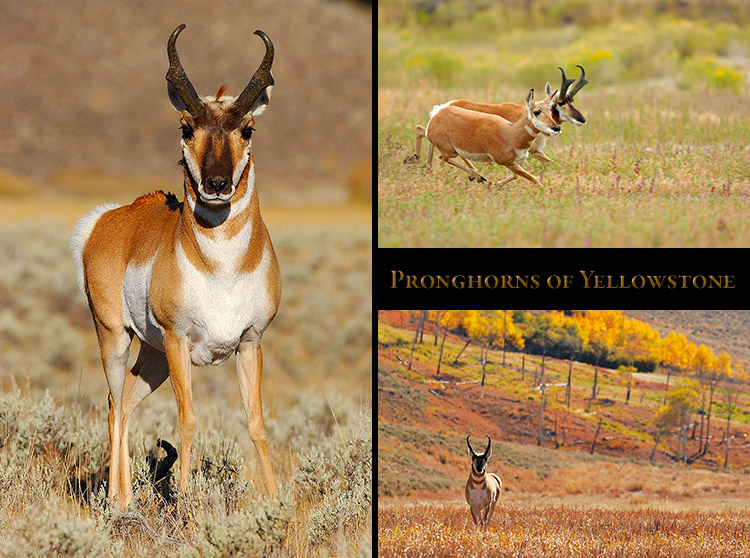
The Pronghorns of Yellowstone section contains 134 images taken in Yellowstone National Park in
autumn from the North Entrance to the Lamar Valley, separated into 3 pages sorted by location and
an Overview index. The Overview index contains sample images from each of the 3 section pages.
|
|
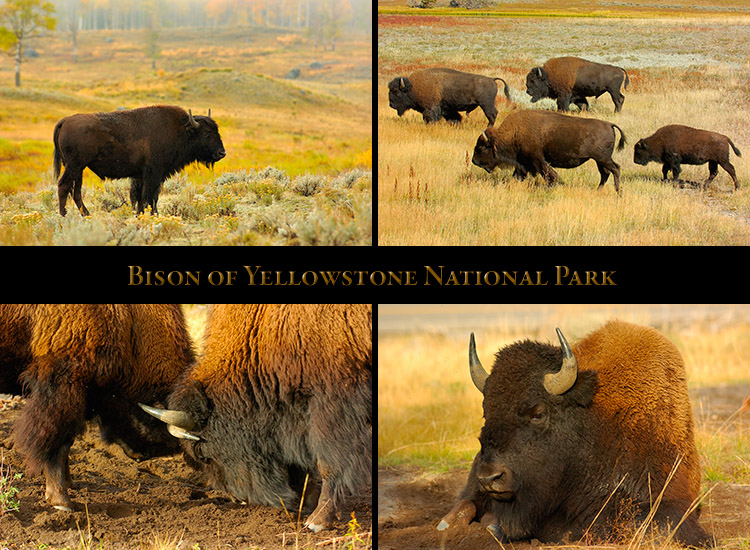
The Bison of Yellowstone Wildlife Study contains 129 images taken in Yellowstone National Park in
the snow before spring and in the autumn in Central Yellowstone and the Lamar and Hayden Valleys.
Portrait, Scenic and Behavioral images are separated into three pages sorted primarily by location,
and this Overview index, which houses several sample images from each of the 3 section pages.
|
|
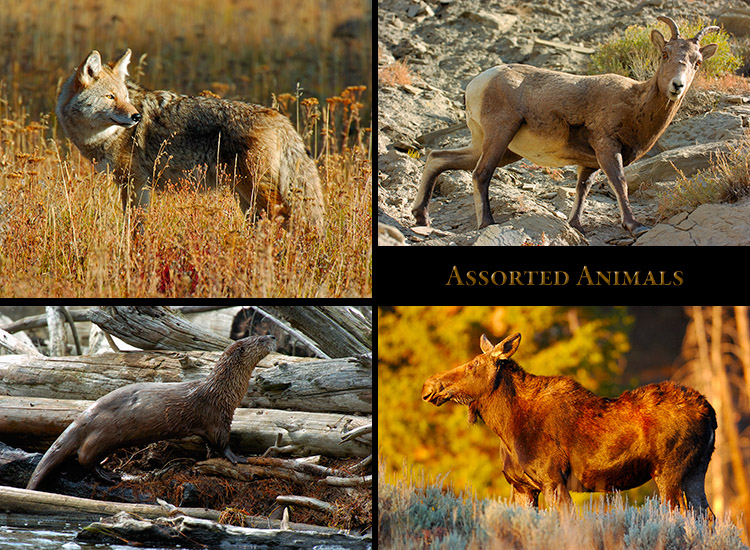
The assorted Animals section contains over 200 images separated on four pages, three of which
detail Bighorn Sheep, Coyotes, and Moose, and one page with both Mule Deer and River Otters.
The index page is an Overview with seven sample images from each of the four section pages.
|
|
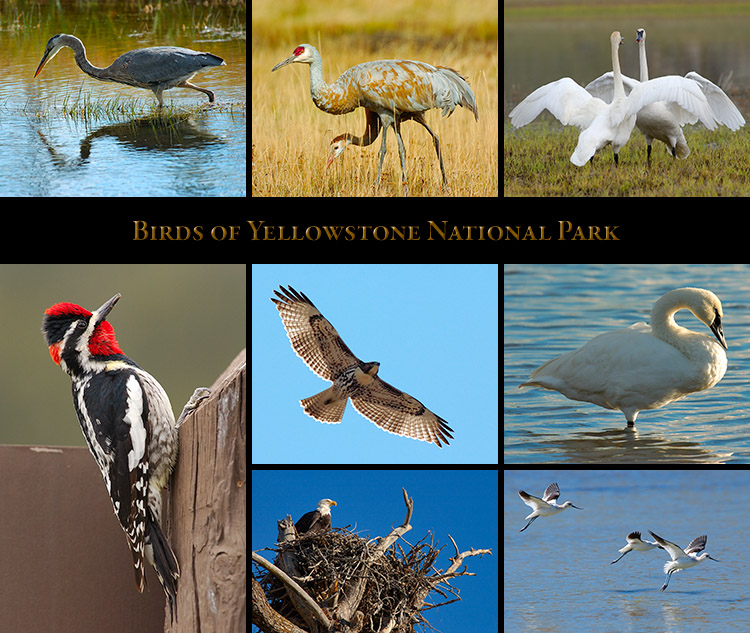
The Birds of Yellowstone section contains over 200 images of Sandhill Cranes, Trumpeter Swans,
Eagles, Hawks, Ospreys, Great Blue Herons, American Avocets, Red-naped Sapsuckers, Magpies,
and Gray Jays taken in various locations in Yellowstone National Park in early spring and autumn, and
include the Mating Dance of the Sandhill Cranes and the Mating Display of the Trumpeter Swans. The
section is separated into five pages and an Overview index with sample images from each page.
|
|
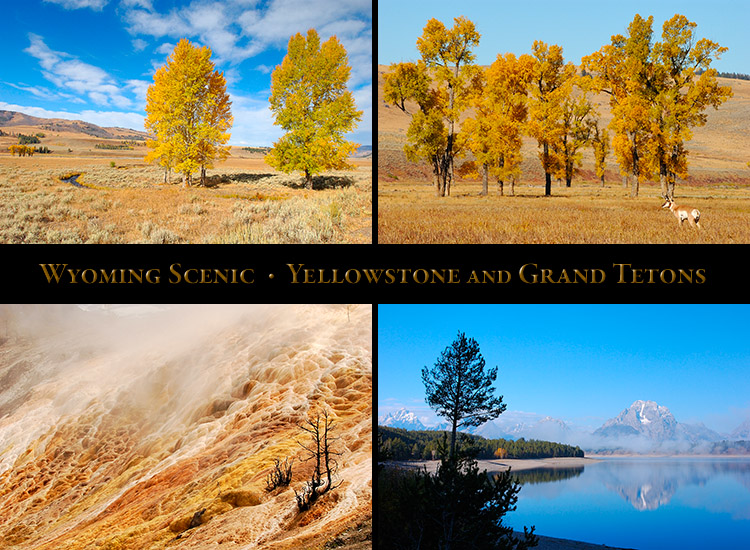
The Wyoming Scenic section contains 200 images of scenery from Yellowstone and Grand Teton
National Parks, housed on five pages. The index page is an Overview with sample images from
each of the five section pages followed by a display composite which links to the relevant page.
|
|
|
|
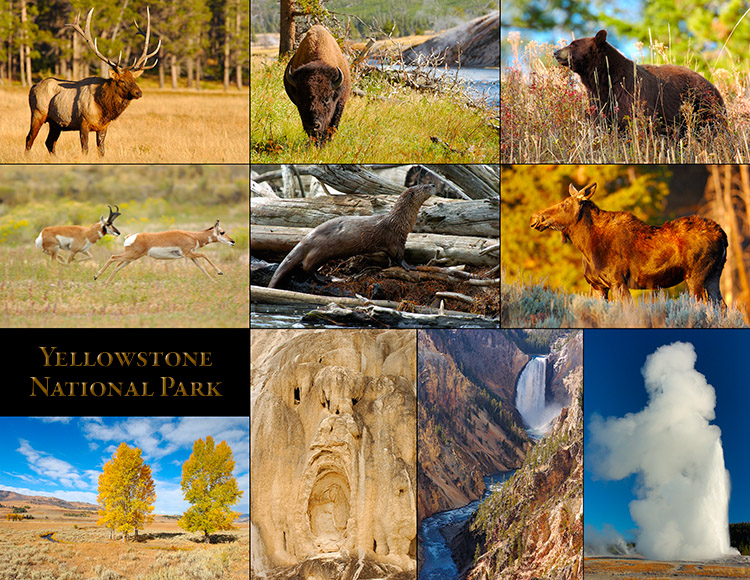
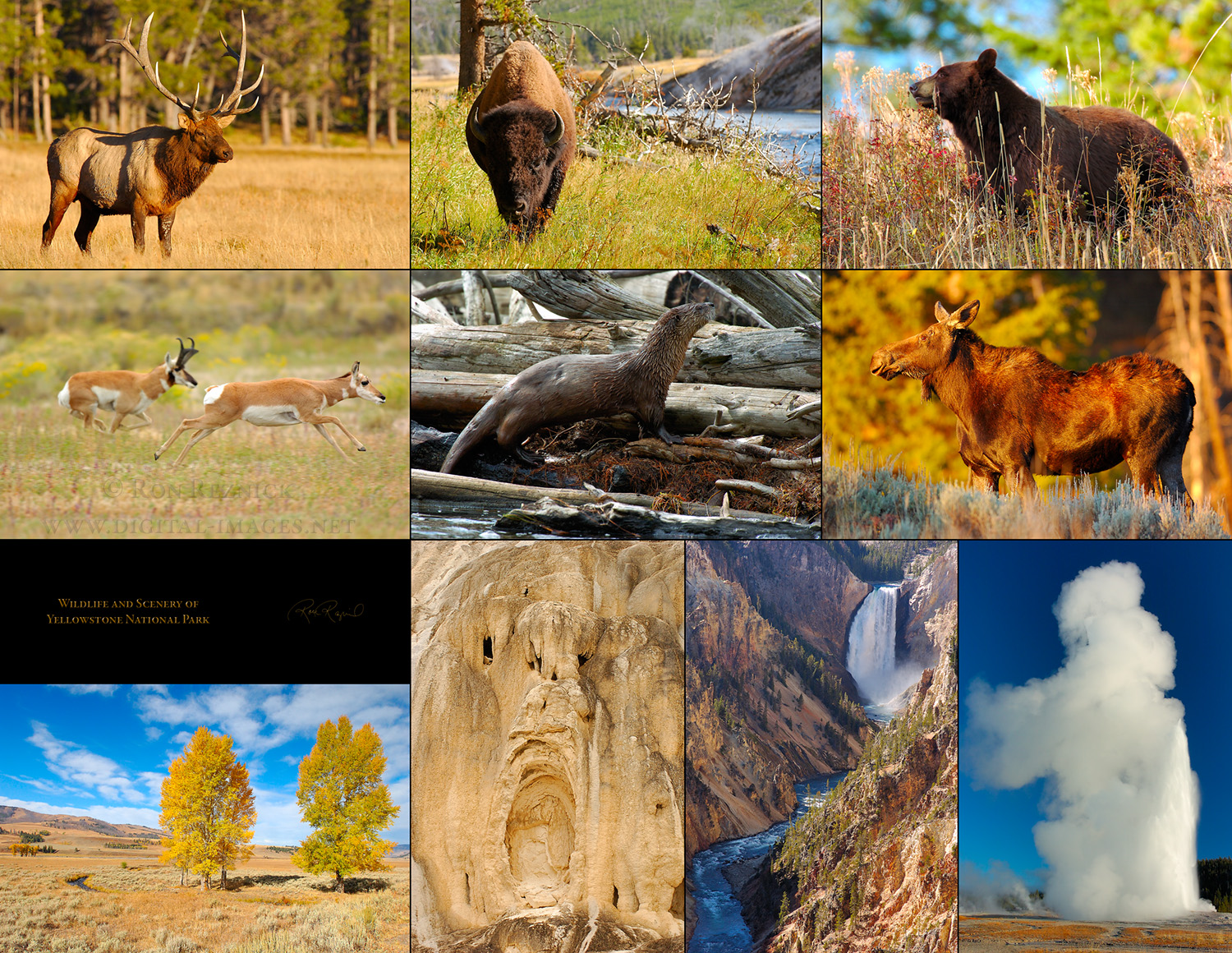
Yellowstone National Park SXL
A 1500 x 1160 version of the SXL Composite (4510 x 3488) with
images of Bull Elk, Bison, Cinnamon Black Bear, running Pronghorn,
a River Otter, a Moose at sunrise, Cottonwoods in the Lamar Valley,
the Travertine Scream at Mammoth Hot Springs, the Lower Fall in
the Grand Canyon of the Yellowstone River, and Old Faithful.
|
Images in this section are in several different Galleries on the Photoshelter website.
The Banner below leads to the Gallery Collections page where a Gallery can be selected.
Images from Yellowstone are in numerous galleries in the Wildlife and Scenic sections.
|
|
|
|
|
|
|
|
|
|
|
|